The Chupacabra: From a Puerto Rican Window to the Texas Brush
The Goat-Sucker
In March 1995, a farmer in Puerto Rico found eight of his sheep dead. The detail that turned a routine livestock loss into the start of a legend was the wounds: each animal had small puncture marks on the chest, and the carcasses were reported to have been drained of blood. No torn throats, no scattered remains, no obvious predator signature. Just neat punctures and, supposedly, no blood left in the body.
That single phrase — drained of blood — did more to shape the next thirty years than any photograph or carcass would. The name that emerged for the unseen culprit was chupacabra, Spanish for "goat-sucker." It is one of the few cryptids whose name describes a behavior rather than an appearance, and that is the key to understanding the whole phenomenon. People named the thing for what it allegedly did to their animals long before anyone agreed on what it looked like.
Puerto Rico also had a template ready. Twenty years earlier, in 1975, the island had lived through the "Moca Vampire" scare — a wave of livestock deaths around the town of Moca, likewise blamed on an unseen blood-draining predator, which officials ultimately attributed to dogs and other ordinary animals. The 1995 deaths did not land on a blank slate; they landed on a community that already had a folk category for exactly this kind of killing. That does not make the 1995 losses less real. It does help explain how fast the story organized itself.
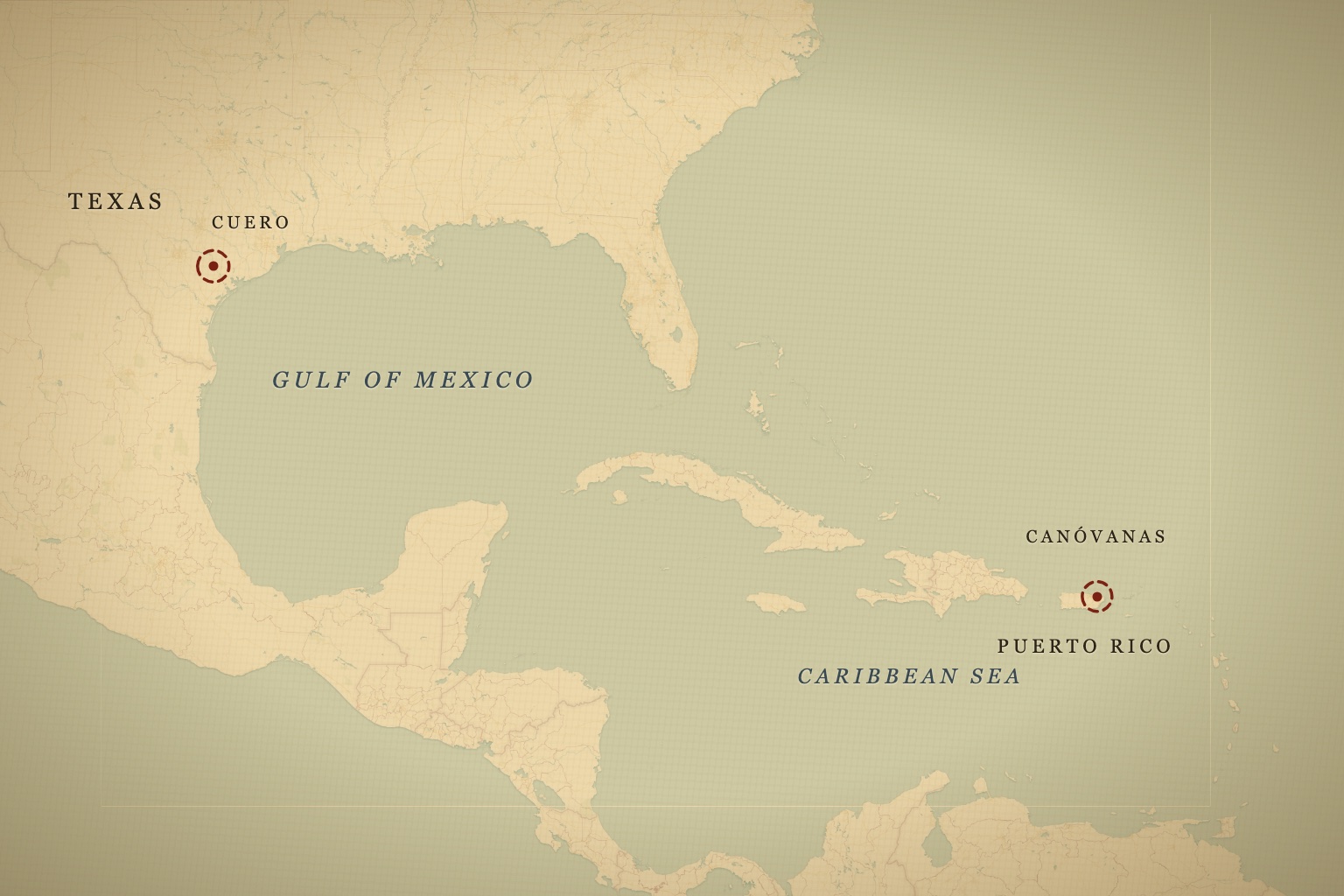
What followed in Puerto Rico through 1995 was a genuine wave. By that autumn, residents across the island were reporting dead goats, sheep, rabbits, and chickens, all attributed to the same nocturnal blood-drinker. The reports clustered hardest around the town of Canóvanas, where local accounts described scores of farm animals killed over the course of the year. The response there was not casual: Canóvanas mayor José "Chemo" Soto, a former police detective, led repeated night expeditions into the hills with armed volunteers and a caged goat as live bait, hoping to trap the predator. The hunts caught nothing, but they are a matter of public record, and they tell you how seriously the people closest to the losses took them. For a serious researcher, the livestock pattern is the part worth taking seriously — something was killing animals, and rural people who depend on those animals are not careless observers of how they die.
The Window in Canóvanas
The chupacabra got its face in the second week of August 1995, in Canóvanas, through a picture window.
A resident named Madelyne Tolentino reported watching a creature move outside her home. Her description is the one that launched a thousand drawings, and it is worth stating precisely because the specifics matter enormously to what came later. She described a being roughly four feet tall, standing upright on two legs, with thin arms, large dark eyes, and a row of spines or feathery quills running down its back. No conventional ears. Small openings rather than a nose. It was, in her account, more reptilian or alien than animal.
This is the "classic" chupacabra — the bipedal, spined, big-eyed creature that appears on the t-shirts and the cartoon logos. And here is the uncomfortable fact a careful investigation has to confront: that image has a documented competing origin.
Tolentino's account did not stay local. It was taken up and circulated by Puerto Rican researchers, illustrated, and reproduced across the island's press and beyond within weeks — which is how one window in Canóvanas became the reference image for a hemisphere-wide phenomenon. Whatever she saw or did not see, her testimony is the single most consequential eyewitness report in modern cryptozoology measured by sheer reach.
The investigator Benjamin Radford spent five years tracking the case, work he published in his 2011 book Tracking the Chupacabra: The Vampire Beast in Fact, Fiction, and Folklore — an investigation that took him to Puerto Rico, where he interviewed Tolentino himself. One of his central findings concerns her testimony directly. The science-fiction horror film Species — featuring a bipedal alien creature named Sil with large eyes and spines along its back — was released in 1995, the same year, and had been playing in Puerto Rico in the weeks before her sighting. Radford reported that Tolentino had seen it beforehand, and that she herself remarked on the resemblance between the movie creature and what she described. He documented striking, point-by-point similarities between Sil and her account. That does not, by itself, prove she invented anything — Tolentino stood by her sighting, and Radford did not accuse her of lying. But it is a real, dated, verifiable detail, and honesty requires putting it on the table rather than editing it out. The single most influential description of the chupacabra may owe as much to a movie monster as to anything that walked through a yard in Canóvanas.
A Name Crosses the Border
The chupacabra did not stay in Puerto Rico, and it did not stay reptilian. As the name spread through Latin America and into the American Southwest over the following years, the creature attached to it quietly changed shape.
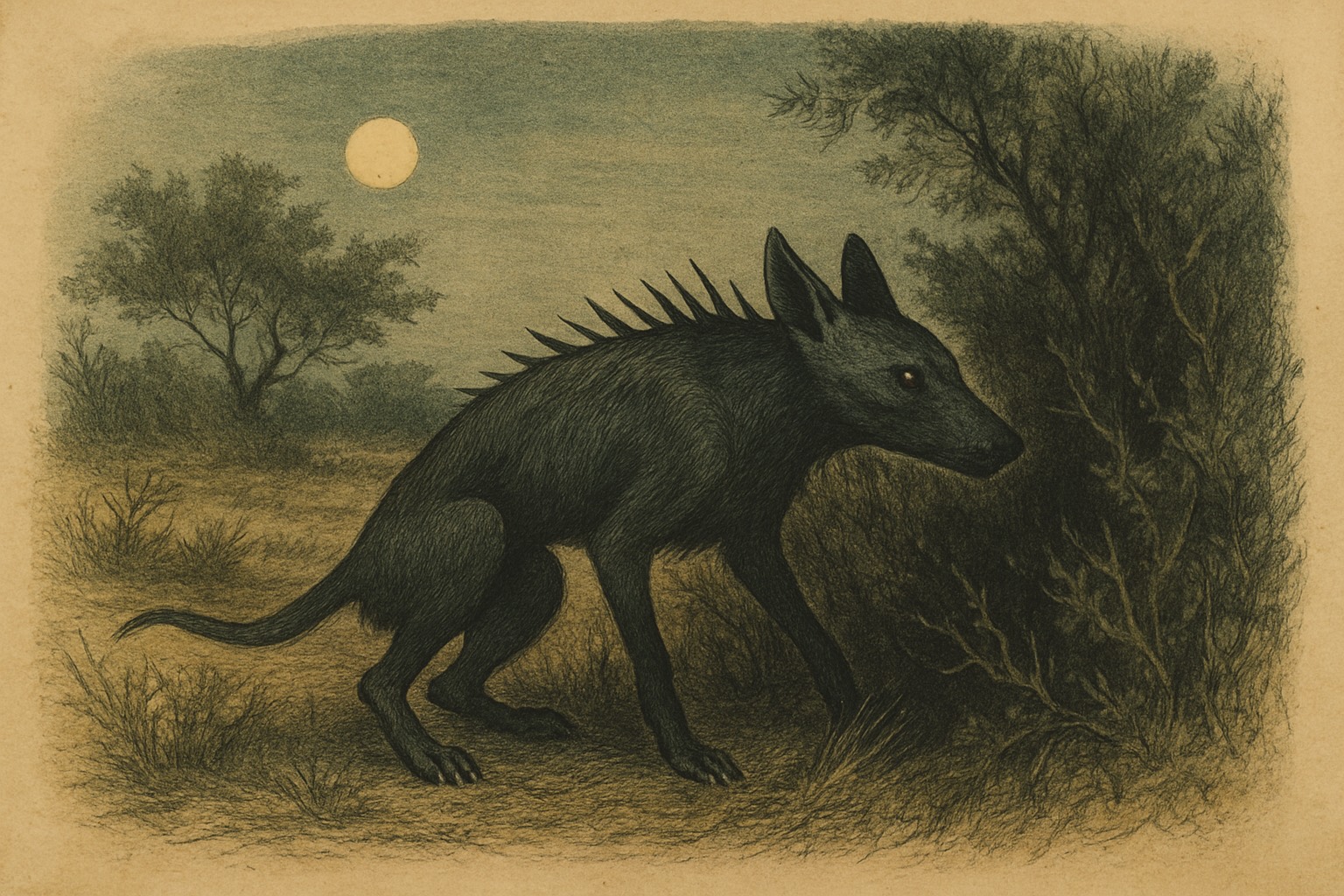
By the time the legend was firmly established in Texas and northern Mexico, the chupacabra people reported finding was not a four-foot biped with spines. It was a dog-sized, four-legged, hairless canid — a thing that looked like a coyote or a dog stripped of its fur, with gray-blue skin, a pronounced spine, and an unsettling, almost prehistoric face. The same name now covered two animals that have almost nothing in common.
The Texas version arrived with a body attached almost from the start. In the summer of 2004, a rancher named Devin McAnally shot a hairless, blue-gray animal on his property in Elmendorf, Texas, after losing chickens. The "Elmendorf Beast" made national news, and DNA testing indicated it was a coyote — one afflicted with severe mange. That case set the regional template: strange hairless carcass, media wave, laboratory deflation. It would repeat, almost beat for beat, three years later.
The most famous of the Southwest cases came from Cuero, Texas. In the summer of 2007, a rancher and hunter named Phylis Canion recovered the carcasses of several strange hairless canines on and around her property — animals weighing roughly forty pounds, with the blue-gray skin and gaunt features that had become the regional template for the creature. Canion kept the remains, including a head she stored in her freezer, and pushed for the kind of thing too few witnesses bother with: actual laboratory testing.
That instinct — keep the evidence, test it, don't just tell the story — is exactly what a field researcher hopes for, and it is why the Texas chupacabra is one of the better-documented cryptid cases on the continent, precisely because the documentation cuts against the legend.
What the Carcasses Said
This is where the chupacabra becomes genuinely useful as a case study, because unlike most cryptids, we have bodies. Real, physical, recovered specimens went to real laboratories. The results are worth presenting straight.
The DNA testing on the Cuero animals did not come back uniform, and that nuance matters. Biologist Mike Forstner at Texas State University ran the first analysis and reported that the DNA matched a coyote. Subsequent testing reported through the University of California, Davis indicated a hybrid — coyote on the mother's side, Mexican wolf on the father's. So the carcasses were canid. Not reptile, not alien, not unknown to science. Coyote, or coyote-wolf cross.
The hairlessness — the single feature that makes these animals look so wrong — has a documented explanation as well: sarcoptic mange. The mite Sarcoptes scabiei burrows into a canid's skin and triggers severe hair loss, thickened and discolored skin, and emaciation. A coyote in the late stages of mange genuinely does look like something that should not exist. The skin turns gray and leathery, the body wastes, the face draws tight against the skull. A healthy coyote and a terminal-mange coyote barely look like the same species.
That also offers a plausible bridge to the original Puerto Rican complaint — the bloodless kills. A weakened, mange-ridden predator can no longer chase down healthy prey, so it targets penned, vulnerable livestock and may feed inefficiently, leaving carcasses that look less like a clean kill and more like something inexplicable to an owner who finds them at dawn. And Radford ran the claim itself to ground: in the cases he examined where alleged chupacabra victims actually received a veterinary necropsy, the animals were not drained of blood — the blood was there, settled and clotted in the body as it normally is after death, and the puncture wounds were consistent with canine teeth. An animal dead for a day does not bleed when cut, which is enough to convince a shaken owner at dawn that the blood is simply gone. The "drained of blood" claim has never been forensically confirmed in the cases that started the panic.
Field Assessment
So what is the chupacabra, for the researcher willing to follow the evidence?
The honest answer is that it is two stories wearing one name, and they have to be assessed separately. The Texas and Mexican "specimens" are, on the physical evidence, mange-afflicted coyotes and coyote-wolf hybrids. That is not a dismissal; it is a real, verifiable, almost satisfying answer, and the people who recovered and tested those carcasses deserve credit for producing it. The Southwest chupacabra is one of the rare cryptid cases that was actually solved, by the people closest to it, using physical evidence.
The Puerto Rican original is harder, because there is no carcass — only the livestock losses and the testimony. The bipedal, spined creature from the Canóvanas window carries a documented pop-culture shadow that any serious treatment has to acknowledge. What remains unresolved is narrower than the legend but real: something was killing animals in rural Puerto Rico in 1995, in numbers that frightened the people who farmed them, and the precise predator behind every one of those deaths was never definitively run down.
That is the lesson the chupacabra holds for the field. It is the cryptid that shows what happens when you actually get the bodies and test them — and it is a reminder that a name can travel faster, and farther, than any animal ever could. The goat-sucker was never one thing. It was a fear with a vivid name, and the name went looking for a body to fit it.
Track sighting locations from this post on the interactive map.
Free account · mark visited sites · build your field list.
Open the tracker